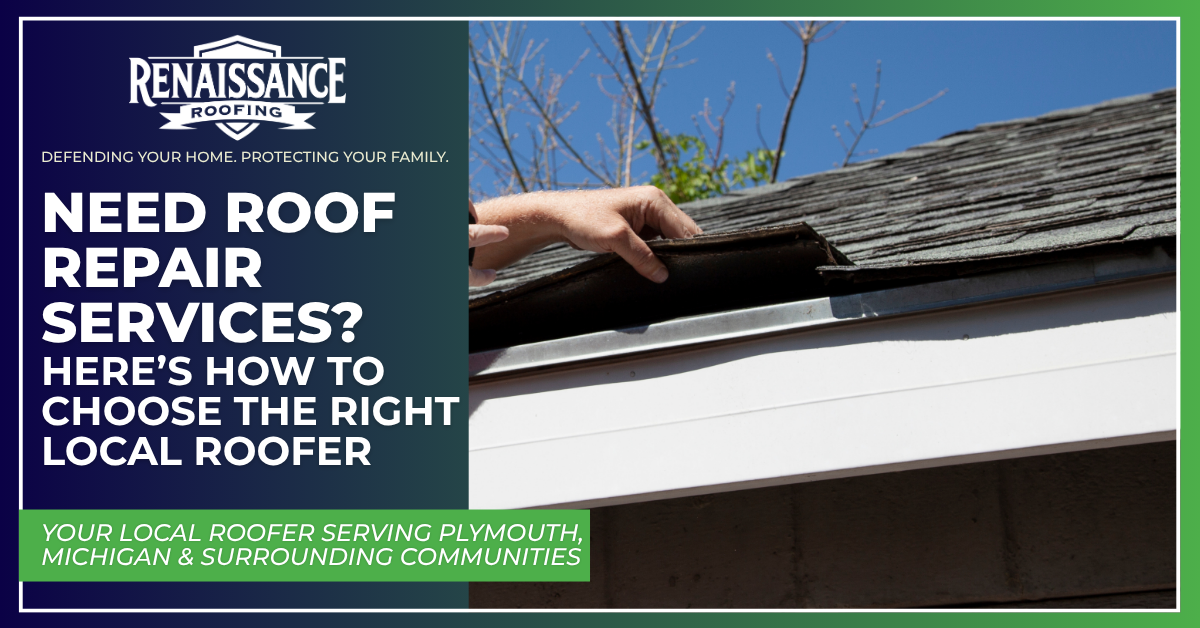
When your roof starts leaking, shingles go missing, flashing pulls away, or storm damage shows up after a rough Michigan weather event, choosing the right local roofer matters. Professional roof repair services can help protect your home, extend your roof’s lifespan, and prevent minor issues from escalating into costly structural damage.
For Michigan homeowners in Plymouth, Novi, Farmington, Farmington Hills, Northville, and nearby communities, roof repair is not something to ignore. Michigan roofs are exposed to snow, ice, heavy rain, strong winds, hail, heat, humidity, and freeze-thaw cycles. That combination can wear down shingles, loosen flashing, expose nail heads, damage ridge caps, and create hidden leak paths.
The best roof repair services start with a detailed inspection, an honest diagnosis, and a clear explanation of whether repair or replacement makes the most sense. Renaissance Roofing provides roof repairs, roof inspections, residential roofing, roof replacement, workmanship-focused installation, manufacturer-backed warranties, and financing options for homeowners in Southeast Michigan.
Key Takeaways
- Roof repair services are best for localized issues such as missing shingles, minor leaks, damaged flashing, storm damage, or minor ventilation-related problems.
- A professional roof repair process usually includes inspection, assessment, preparation, repair work, cleanup, and a final inspection.
- Homeowners should ask about licensing, insurance, warranties, repair materials, cost, timeline, and whether the issue may qualify for insurance coverage.
- DIY roof repair can be risky, especially after storms. NRCA recommends assessing storm damage from the ground and leaving closer roof assessments and repairs to professionals.
- The cheapest roofer is not always the best choice. A detailed written estimate should explain materials, scope of work, flashing, ventilation, payment terms, and warranty coverage.
What Are Roof Repair Services?
Roof repair services include professional roofing work designed to fix specific roof problems without replacing the entire roofing system. Common repairs include replacing missing shingles, fixing roof leaks, repairing flashing, sealing exposed fasteners, correcting storm damage, addressing vent issues, and repairing damaged roof valleys or ridge caps.
A roof repair is usually recommended when the damage is limited to a smaller area and the rest of the roof is still in good condition. For example, if a few shingles blew off during a storm, a local roofer may be able to replace those shingles and inspect the surrounding area for hidden damage. If your roof has widespread shingle failure, recurring leaks, soft decking, or is near the end of its service life, roof replacement may be the better long-term solution.
Source-backed insight: GAF explains that the decision to repair or replace a roof depends largely on the extent of the damage. Localized damage may be repaired, while widespread issues may require replacement.
Knowledge Box: What Is Roof Flashing?
Roof flashing is thin metal installed around chimneys, walls, vents, skylights, valleys, and roof transitions. Flashing helps direct water away from vulnerable areas. Damaged flashing is one of the most common causes of roof leaks.
How Do You Know If You Need Roof Repair Services?
You may need roof repair services if you notice visible damage from the ground, water stains inside the home, missing shingles, or signs of moisture in the attic. The faster you schedule an inspection, the easier it is to prevent the issue from spreading.
Common signs you may need roof repair include:
| Warning Sign | What It Could Mean |
| Missing shingles | Wind damage, aging shingles, or poor installation |
| Water stains on ceilings | Active roof leak or attic moisture issue |
| Damaged flashing | Higher leak risk around chimneys, vents, or walls |
| Granules in gutters | Aging asphalt shingles or storm wear |
| Lifted shingles | Wind damage or failing adhesive strips |
| Soft roof decking | Moisture damage beneath the shingles |
| Leaks after rain | Failed flashing, valleys, shingles, or pipe boots |
| Ice buildup near eaves | Heat loss, ventilation issues, or ice dam risk |
Michigan homeowners should also look for storm-related issues after high winds or hail. NOAA’s Storm Events Database tracks severe weather records from January 1950 through February 2026, and a May 2025 Michigan event included localized wind gusts of 55–75 mph and hail reports up to 1.75 inches.
Source-backed insight: The Insurance Institute for Business & Home Safety has studied the impact of hail on asphalt shingles and notes that some common hail-resistance tests may not fully replicate the physics of hail.
Knowledge Box: What Is a Roof Leak Source?
A roof leak source is the actual point where water enters the roofing system. It is not always directly above the ceiling stain. Water can travel along rafters, decking, insulation, or wall cavities before showing up inside the home.
What Is the Roof Repair Process?
A professional roof repair process usually follows four steps: inspection and assessment, preparation, repair work, and cleanup with final inspection.
-
Inspection and Assessment
A roofer checks the condition of the shingles, flashing, vents, valleys, pipe boots, ridge caps, gutters, roof decking, and attic, where accessible. The goal is to identify both the visible damage and the root cause.
-
Preparation
The crew prepares the repair area, gathers matching or compatible materials, protects landscaping, and explains what will be repaired.
-
Executing the Repair
The roofer completes the work. This may include replacing shingles, repairing flashing, sealing around roof penetrations, replacing pipe boots, correcting storm damage, or addressing ventilation-related concerns.
-
Cleanup and Final Inspection
After the repair, the roofer should clean the work area, remove debris, inspect the repair, and explain what was completed.
Source-backed insight: NRCA says detailed roofing proposals should identify the type of roof covering, materials, scope of work, removal or replacement details, flashing, ventilation, installation method, schedule, payment procedures, and warranty terms.
Knowledge Box: What Is a Roof Inspection?
A roof inspection is a professional evaluation of the roof’s condition. It helps determine whether the home needs repair, replacement, or maintenance.
How Do You Choose the Right Local Roofer?
To find experienced roof repair services near you, look for a local roofing company with strong reviews, clear communication, roofing-specific experience, proper licensing, insurance, written estimates, and a proven service area.
A reliable local roofer should be able to answer:
- What caused the roof problem?
- Can this be repaired, or is replacement a better option?
- What materials will be used?
- Will the repair match my current roof shingles?
- Is roof flashing part of the repair?
- Is there a workmanship warranty?
- Are manufacturer warranties affected?
- Can I get a written estimate?
- Do you offer roof financing if the repair leads to replacement?
The Federal Trade Commission recommends considering only licensed and insured contractors, getting recommendations from people you trust, checking complaints, reading reviews carefully, getting multiple estimates, and reviewing contracts before signing.
Michigan homeowners can also use state resources. Michigan LARA provides licensing information for residential builders and maintenance alteration contractors. At the same time, the Michigan Attorney General warns that common remodeling complaints include high-pressure sales, confusing contract terms, poor workmanship, failure to honor warranties, incomplete work, overcharging, and contractor foreclosure threats.
Knowledge Box: What Is a Workmanship Warranty?
A workmanship warranty covers certain installation-related issues provided by the contractor. It differs from a manufacturer’s warranty, which usually covers defects in the roofing product itself.
DIY Roof Repair vs. Hiring a Professional Roofer
Some homeowners consider DIY roof repair to save money. For small maintenance tasks, it may feel tempting. But roof repair involves fall risk, hidden moisture problems, improper sealing risks, and potential warranty issues.
| Option | Pros | Cons |
| DIY Roof Repair | May seem cheaper upfront; can handle very small temporary fixes from the ground | Safety risk, easy to miss hidden damage, may void warranty, may not solve leak source |
| Professional Roof Repair | Safer, more accurate diagnosis, better materials, written estimate, warranty options | Costs more upfront than a DIY patch |
For most homeowners, hiring a professional is the safer and smarter choice. This is especially true for steep roofs, active leaks, flashing repairs, storm damage, or anything involving insurance.
Source-backed insight: NRCA strongly encourages homeowners and business owners to assess storm damage from ground level and avoid attempting roof repairs themselves after severe weather.
How Much Do Roof Repair Services Cost?
The cost of roof repair services depends on the type of damage, roof pitch, material availability, labor, roof height, accessibility, flashing work, and whether hidden damage is found. A small shingle repair may cost far less than a leak involving flashing, decking, insulation, and interior water damage.
Factors that affect roof repair cost include:
- Number of damaged shingles
- Type and brand of roof shingles
- Roof pitch and height
- Location of the leak
- Flashing repair complexity
- Pipe boot or vent replacement
- Storm damage severity
- Decking condition
- Emergency service needs
- Warranty and material requirements
This is why a professional inspection matters. A good estimate should explain what is included, rather than just giving a vague price.
Will Homeowners Insurance Cover Roof Repair?
Homeowners’ insurance may cover roof repair if a sudden covered event, such as wind, hail, lightning, or a fallen tree, caused the damage. It usually does not cover normal wear and tear, old shingles, poor maintenance, or damage that happens slowly over time.
The Insurance Information Institute explains that some natural disasters, including windstorms, hail, and lightning, are generally covered under homeowners’ insurance.
Before filing a claim, document the damage with photos, avoid climbing onto the roof, contact your insurance agent, and schedule an inspection with a roofing contractor. If the repair cost is close to your deductible, ask your insurer whether filing a claim makes sense.
When Should You Repair vs. Replace Your Roof?
Roof repair is usually the right choice when the damage is localized, and the rest of the roofing system still has life left. Roof replacement may be preferable when the roof is aging, leaking in multiple areas, missing many shingles, showing widespread granule loss, or experiencing repeated problems.
Repair may make sense when:
- Damage is limited to one section
- A few shingles are missing
- Flashing needs repair
- The roof is not near the end of its lifespan
- The decking is still solid
- The leak source is isolated
Replacement may make sense when:
- The roof is 20+ years old
- Shingles are curling, cracking, or shedding granules
- Leaks keep returning
- There is widespread storm damage
- Decking is soft or rotted
- Repairs would only delay a larger issue
Professional roof repairs can address leaks and damage to extend a roof’s life, while roof replacement restores long-term protection when a roof is failing.
What Roofing Materials Are Best for Roof Repair?
The best roofing materials for roof repair depend on your existing roof. Most Michigan homeowners have asphalt shingles, so repair work often involves matching compatible asphalt shingles, underlayment, flashing, pipe boots, ridge caps, and ventilation components.
Common roof repair materials include:
- Asphalt shingles
- Synthetic underlayment
- Ice and water shield
- Step flashing
- Counter flashing
- Pipe boots
- Ridge cap shingles
- Drip edge
- Roof vents
- Sealants approved for roofing use
If your home has GAF or CertainTeed shingles, ask whether matching materials are available and whether the repair affects the manufacturer’s warranty coverage. GAF’s warranty information notes that warranty coverage can vary by product, accessory use, and enhanced warranty eligibility.
Why Roof Ventilation Matters During Repair
Not every leak is only a shingle problem. Sometimes, roof damage is linked to ventilation, attic moisture, condensation, or ice dams. In Michigan, this is especially important because winter weather can expose weak points in a roofing system.
Poor ventilation can contribute to:
- Excess attic heat
- Moisture buildup
- Frost in the attic
- Mold risk
- Ice dam formation
- Shortened shingle life
- Higher heating and cooling strain
Knowledge Box: What Is Roof Ventilation?
Roof ventilation is the system that allows air to enter and exit the attic, often through soffit vents, ridge vents, roof vents, or gable vents. Proper ventilation helps manage heat and moisture under the roof deck.
Questions to Ask Before Hiring a Roof Repair Contractor
Before choosing a company for roof repair services, ask direct questions. A trustworthy roofer should not rush you, dodge warranty questions, or avoid giving a written estimate.
Ask:
- Are you licensed and insured?
- Do you offer roof repair services in my area?
- Can you identify the source of the roof leak?
- Will I receive a written estimate?
- What materials will be used?
- Will the repair match my existing shingles?
- Is flashing included if needed?
- What happens if damaged decking is found?
- Does a workmanship warranty cover this repair?
- Could this damage qualify for homeowners’ insurance?
- How soon can the repair be completed?
Choosing the right roofing repair company can save you time, money, and stress. A roof problem may start with a single missing shingle or a small leak, but Michigan weather can quickly make it worse. That is why homeowners should act early, ask the right questions, and work with a local roofing company that understands roof repair, storm damage, shingles, flashing, ventilation, warranties, and financing.
If you live in Plymouth, Novi, Farmington, Farmington Hills, Northville, or nearby Southeast Michigan communities, Renaissance Roofing can help inspect the problem and recommend the right next step.
FAQs About Roof Repair Services
-
How do I know if I need roof repair services?
You may need roof repair services if you notice missing shingles, water stains, roof leaks, damaged flashing, granules in gutters, lifted shingles, or visible storm damage. A professional inspection can identify the source of the problem and determine whether repair or replacement is the better choice.
-
Should I repair or replace my roof?
Roof repair is usually best for localized damage, while roof replacement may be better for older roofs, widespread shingle failure, recurring leaks, or major storm damage. GAF notes that localized issues may be repaired, but significant or widespread problems often require replacement.
-
Can homeowners’ insurance pay for roof repair?
Homeowners’ insurance may cover roof repair when a covered event, such as wind, hail, lightning, or a fallen tree, causes the damage. It usually does not cover normal wear and tear or maintenance-related issues. Always review your policy and speak with your insurance agent.
-
Is DIY roof repair a good idea?
DIY roof repair is usually not recommended due to fall risks, hidden damage, improper sealing, and potential warranty issues. NRCA recommends assessing storm damage from ground level and leaving closer roof assessment and repair to professionals.
-
What should I ask a roof repair contractor?
Ask whether the contractor is licensed and insured, what caused the problem, what materials will be used, whether flashing or decking is involved, whether the work includes a warranty, and whether the estimate will be provided in writing.
-
What are the best roofing materials for roof repair?
For most Michigan homes, asphalt shingles are the most common repair material. Depending on the issue, the repair may also require underlayment, flashing, pipe boots, ridge caps, drip edge, roof vents, or ice and water shield.
0 Comments