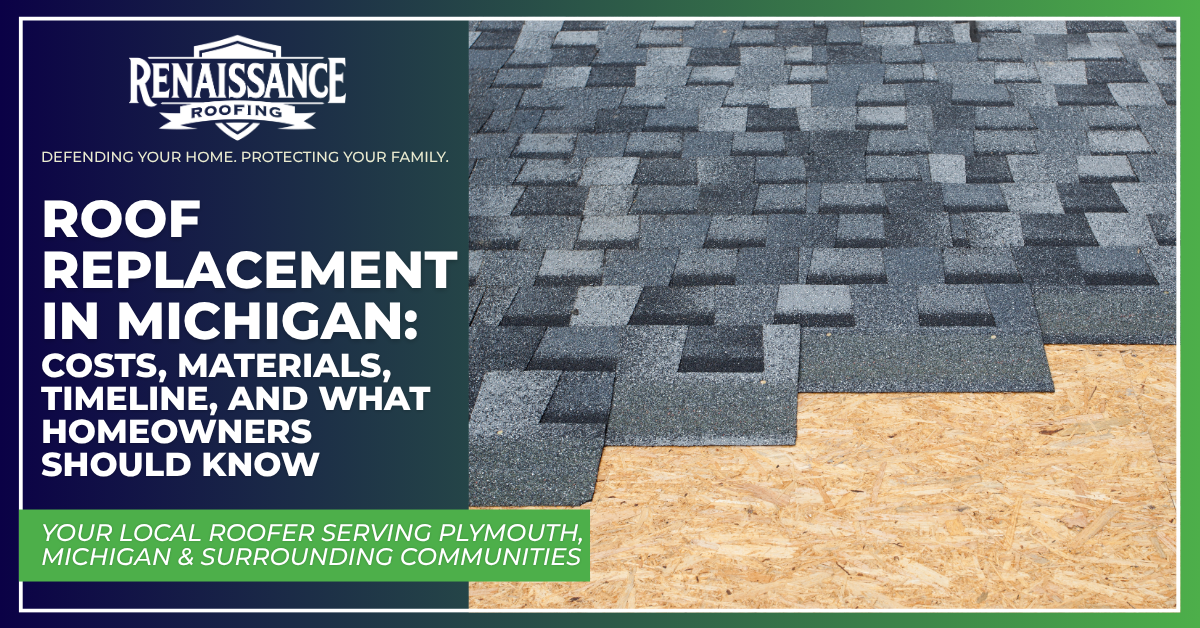
If you are planning a roof replacement in Michigan, start with one simple idea: your roof is not just shingles. It is a full system that must manage water, temperature swings, wind, attic moisture, and ice. In Michigan’s climate, a roof installed well and ventilated correctly will always outperform one that uses the cheapest materials or the lowest bid.
Key Takeaway Box
- Michigan roofs must handle snow, ice, wind, rain, and freeze-thaw cycles.
- Ventilation, underlayment, flashing, and attic conditions matter just as much as the shingles.
- Cost is driven mostly by size, pitch, complexity, material choice, and hidden repairs.
- The National Roofing Contractors Association notes that maintenance is one of the most important factors affecting roof life after proper installation.
- A written estimate is the best way to understand the real cost for your home.
Many homeowners start this process by asking, “How much is a new roof?” That is a fair question, but the better question is, “What kind of roof system does my house need in Michigan, and what will it take to install it correctly?” That shift matters because two roofs that look similar from the street can require very different scopes of work once the tear-off begins.
Why Roof Replacement Matters More in Michigan
Michigan weather is hard on roofing systems. Snow loads, wind-driven rain, and repeated freeze-thaw cycles put stress on shingles, flashing, sealants, and roof penetrations. FEMA warns that ice dams can block drainage and contribute to leaks. At the same time, the U.S. Department of Energy notes that inadequate insulation and poor attic conditions can increase heat loss and undermine performance.
That is why a good roof replacement is really a system upgrade. If the attic is holding moisture, if the ventilation is unbalanced, or if flashing details are weak, a new shingle alone will not solve the larger problem. In Michigan, replacement should be approached with the climate in mind.
Definition Box: Roofing System
A roofing system is the full assembly that protects the home, including decking, underlayment, flashing, ventilation, fasteners, and the finished roof covering, such as asphalt shingles or metal panels.
What Is Included in a Full Roof Replacement?
A full roof replacement usually starts with tearing off the old roofing material down to the deck. After that, the contractor checks the deck for soft spots, rot, or water damage. Then the new system is reapplied in layers: leak barriers in vulnerable areas, underlayment, flashing, ventilation components, and the finished roofing material.
For most Michigan homes, that process should include close attention to eaves, valleys, pipe boots, chimneys, step flashing, and attic airflow. NRCA explains that proper installation and ongoing maintenance are major drivers of roof service life, which is why details matter so much at this stage.
- Roof covering
- Flashing
- Underlayment
- Ice and water protection
- Roof deck
- Ventilation path from soffit to ridge
Definition Box: Flashing
Flashing is the metal material installed at joints, walls, chimneys, valleys, and penetrations to direct water away from vulnerable areas.
What Actually Drives the Cost of a Roof Replacement?
There is no honest one-price-fits-all answer, because roof replacement costs are shaped by a handful of variables that can change the project quickly.
-
Roof Size
Bigger roofs need more labor, more materials, and more disposal. This is the most obvious cost driver.
-
Roof Pitch
A steep roof is slower and more complicated to work on. It often requires additional safety setup and can reduce installation speed.
-
Roof Complexity
Dormers, valleys, skylights, chimneys, multiple ridges, wall intersections, and cut-up designs create more labor. A simple ranch and a complex two-story home can have very different replacement costs even if their square footage is similar.
-
Material Choice
Standard asphalt shingles, architectural shingles, and metal roofing all have different material and labor profiles. Some options cost more up front but may deliver longer service life.
-
Tear-Off Condition
Once the old roof comes off, damaged decking, wet insulation, failed flashing, and ventilation issues may need to be addressed before the new roof goes on.
-
Ventilation and Attic Corrections
The Department of Energy points out that insulation and attic conditions affect heat flow and energy performance. DOE’s durable attic guidance also notes that improper ventilation can allow moisture to accumulate, damaging wood and insulation.
Definition Box: Attic Ventilation
Attic ventilation is the movement of air through the attic, typically via intake vents at the low end of the roof and exhaust vents near the ridge, to help control heat and moisture.
Planning Table: What Usually Affects Price the Most?
| Cost driver | Why it matters | What to ask your roofer |
|---|---|---|
| Roof size | More squares means more material and labor | How many roofing squares is my roof? |
| Pitch | Steeper roofs are slower and riskier to install | Does the pitch change labor cost? |
| Complexity | Valleys, dormers, and penetrations add time | Which details on my roof add labor? |
| Material | Asphalt, architectural, and metal vary widely | What are my options and tradeoffs? |
| Deck condition | Rot or damage increases the scope | What happens if bad decking is found? |
| Ventilation | Poor airflow can shorten roof life | Will you evaluate intake and exhaust? |
The table is useful because it shows why online calculators can only get you so far. They do not know whether your chimney flashing is failing, whether your soffit vents are blocked, or whether the plywood under a valley has been wet for years.
Which Roofing Material Makes the Most Sense in Michigan?
For most homes, the decision comes down to asphalt shingles versus metal. Each can work in Michigan, but they solve the problem differently.
Asphalt Shingles
Asphalt shingles are still the most common residential roofing choice because they are cost-effective, widely available, and familiar to homeowners. They can perform well in Michigan when the entire system is properly designed and installed.
Pros
- Lower upfront cost
- Many colors and profiles
- Easier to match with existing neighborhood aesthetics
- Good option for many standard residential roofs
Cons
- Shorter life than metal
- More vulnerable to wear from age and weather
- May need replacement sooner over the life of the home
Metal Roofing
Metal roofing appeals to homeowners who are thinking long term. The Metal Roofing Alliance says metal roofing can have a lifespan of 50+ years, and its FAQ guidance states metal roofs often last 30 to 50+ years and can last two to three times longer than a regular roof.
Pros
- Long service life
- Strong performance in snow and ice conditions
- Potential energy benefits depending on product and finish
- Lower replacement frequency over time
Cons
- Higher upfront cost
- Not every home or budget is a fit
- Detailed work and installer experience matter a lot
Material Comparison Table
| Material | Best fit | Main advantage | Main drawback |
|---|---|---|---|
| 3-tab or basic asphalt | Tighter budgets | Lower upfront cost | Shorter service life |
| Architectural shingles | Most Michigan homes | Better durability and appearance | Costs more than basic asphalt |
| Metal roofing | Long-term ownership | Long life and strong weather performance | Higher initial investment |
How Long Should a Roof Last?
There is no universal lifespan because climate, design, maintenance, and installation quality all matter. NRCA states that most new roofs are designed to provide useful service for about 20 years, while some roof types, such as slate, clay tile, and certain metals, can last longer. NRCA also notes that the actual lifespan depends on climate, design, material quality, proper application, and maintenance.
That is an important point for Michigan homeowners. A roof in a mild climate and a roof in southeast Michigan are not dealing with the same conditions. Repeated weather stress, attic moisture, and storm exposure can all shorten real-world service life.
Knowledge Callout
According to NRCA, maintenance is one of the most important factors affecting roof life after proper installation. That means inspections and small repairs are not optional if you want to maximize service life.
What Are the Most Common Reasons Roofs Fail Early?
Most roofs do not fail because one thing goes wrong. They fail because several smaller issues stack up.
Poor Flashing Details
Water almost always finds the weak spots first. Chimneys, skylights, roof-to-wall transitions, and penetrations are common failure points.
Inadequate Attic Ventilation
When warm, moist air gets trapped in the attic, it can contribute to condensation, mold risk, insulation damage, and roof deck issues. DOE’s durable attic guidance specifically warns that improper attic ventilation can allow moisture buildup and damage wood and insulation.
Ice Dams
FEMA advises homeowners to insulate walls and attics to lower energy costs and help prevent ice dams, which can block proper drainage and cause leaks. In Michigan, that is a practical reminder that roof replacement should not be separated from attic performance.
Delayed Repairs
A small leak near flashing may seem minor, but if it persists through a season, it can lead to deck damage, insulation problems, and interior staining.
Should You Repair the Roof or Replace It?
This is one of the biggest search-intent questions, and it deserves a straight answer.
When Repair May Make Sense
Repair can make sense when the roof is relatively young, the issue is isolated, and the system is otherwise in good condition. A few blown-off shingles after a storm is not the same as widespread granule loss, repeated leaks, and soft decking.
When Replacement Is the Better Move
Replacement usually makes more sense when the roof is older, the problems are spread across multiple areas, or you are starting to stack one repair on top of another. It also makes sense when the underlying issues go beyond the surface, such as deck problems or ventilation issues.
Repair vs. Replacement Comparison
| Option | When it makes sense | Main benefit | Main limitation |
|---|---|---|---|
| Repair | Isolated issue on a newer roof | Lower immediate cost | Does not reset the whole system |
| Replacement | Aging or widespread issues | Full-system reset | Higher upfront investment |
What Happens During a Roof Replacement Project?
Homeowners often want to know what the process will feel like day to day. Here is the simple version.
Inspection and Written Estimate
The contractor inspects the roof, attic conditions if needed, access points, and drainage details. A good estimate should spell out materials, tear-off, protection, flashing scope, ventilation plan, cleanup, and warranty information.
Material Selection
This is where you decide what level of performance and budget makes sense. For many homes, architectural shingles are the middle-ground choice for homeowners staying in the house long term.
Tear-Off and Deck Inspection
The old roof comes off, the deck is exposed, and hidden damage becomes visible. This is the point at which scope changes may occur if soft or rotted areas are discovered.
Installation
The new system goes on in layers. This is also the stage where the quality of the crew and the details matter most.
Cleanup and Final Walkthrough
A professional crew should protect landscaping, control debris, and leave the property clean. The final inspection should cover vulnerable details and confirm that ventilation components were installed as planned.
What Should You Ask Before Signing a Roofing Contract?
Many bad roofing experiences start before the first shingle is removed. Ask these questions up front.
- What underlayment and leak barrier products are included?
- How will you handle flashing at chimneys and walls?
- Will you evaluate attic ventilation, not just the shingles?
- What happens if damaged decking is found?
- What manufacturer warranty and workmanship warranty are included?
- Who will supervise the project each day?
- How will you protect landscaping and clean up nails and debris?
Those questions help separate a real system-based estimate from a shallow quote.
Pro Tips for Michigan Homeowners
Pro tip: Ask for the ventilation plan in writing. Many estimates focus on shingles but never clearly explain intake and exhaust.
Pro tip: Do not compare bids only by total price. Compare scope, flashing details, ventilation, cleanup, and warranty.
Pro tip: If you have had ice-dam problems before, mention them early. That history matters during planning.
Pro tip: If your attic has had moisture or mold issues, that should be part of the conversation before replacement begins.
What Is Underlayment and Why Does It Matter?
Definition Box: Underlayment
Underlayment is the water-resistant or waterproof layer installed between the roof deck and the finished roof covering. It adds a second line of defense if water gets past the outer material.
Underlayment does not replace good shingles or flashing, but it adds valuable backup protection. In Michigan’s climate, that matters. Wind-driven rain, ice backup, and snowmelt can all test the layers beneath the visible roof covering.
Quick-Glance Checklist Before You Replace Your Roof
- Know the approximate age of the current roof
- Note any past leaks or ice dam history
- Ask whether ventilation will be assessed
- Review the estimate for flashing details
- Confirm cleanup and disposal terms
- Understand both manufacturer and workmanship warranties
FAQs
What is the most important part of a roof replacement in Michigan?
The most important part is treating the roof as a system, not just a shingle swap. In Michigan, ventilation, flashing, underlayment, and leak protection matter just as much as the visible roof covering.
How do I know whether my attic needs attention during a roof replacement?
If you have had ice dams, mold smells, wet insulation, high winter heating bills, or roof leaks that seem to come and go, your attic should be evaluated. DOE guidance makes it clear that insulation and ventilation conditions affect moisture and performance.
Do ice dams mean I automatically need a new roof?
Not always. Ice dams are often a sign of heat loss and attic performance problems, not just roof-covering failure. In some cases, a targeted repair and attic correction may help. In other cases, replacement is the better long-term fix.
How often should a roof be inspected?
At a minimum, it is smart to have a roof looked at periodically and after major storms. NRCA emphasizes that periodic inspection and maintenance are important for maximum roof life.
What should I prioritize if I cannot choose every premium option?
Prioritize correct installation, flashing, leak barriers in vulnerable areas, and balanced ventilation. Those details usually matter more to performance than cosmetic upgrades.
A successful roof replacement in Michigan comes down to making good decisions before the project starts. Focus on system design, ventilation, flashing, weather exposure, and the roof deck’s actual condition. If you do that, you are much more likely to end up with a roof that performs the way it should in Michigan’s climate.
For homeowners in southeast Michigan, Renaissance Roofing can help you evaluate the full picture, not just the shingles. If you want a clear estimate and a roof replacement plan built for local conditions, contact Renaissance Roofing for an inspection and honest guidance.
0 Comments